1-Minute Summary & Hook
Kyoto in cherry blossom season is beautiful. It is also one of the most exhausting spring trips in Japan if you plan it badly. Hotels surge, buses jam, and by 9 a.m. many famous spots feel more like crowd corridors than flower scenes. That is why Kyoto cherry blossom season is less about romance first and more about operations first.
This guide is built around when to enter Gion, when to abandon buses, how to split east vs west Kyoto, and where a night illumination actually justifies the energy.
#bestForcouples, first-time Kyoto blossom visitors, premium short-break travelers#difficultymedium#bestSeasonlate March to early April#keyTransportrail + walking, with buses minimized#oneLineTakeIn Kyoto cherry blossom season, the better traveler is the one with the cleaner clock, not the longer wishlist.
Why Kyoto Cherry Blossoms?
1) Kyoto gives spring its most layered Japanese backdrop
Cherry blossoms can be beautiful anywhere in Japan. Kyoto is different because the background matters as much as the flowers: machiya streets, tiled roofs, temple gates, stone slopes, narrow lanes, and canals. The visual layering is what makes Kyoto feel overwhelmingly “Kyoto.”
2) A well-built route lets you see three different versions of spring in one trip
Morning Gion, daytime Philosopher's Path, and a night illumination at Kiyomizu or Maruyama all feel like different cities. But that only works when the timing is controlled.
⚠️ Reality Check Before You Go
1) Kyoto city buses are unreliable in peak blossom season
Buses are fine in quieter seasons. During blossom peaks, they become one of the weakest links in the route.
- default to subway + rail + walking
- use buses only for limited short hops
- late afternoon can be especially bad
2) Gion and Arashiyama both matter, but their golden hours are different
- Gion Shinbashi: 6-8 a.m.
- Arashiyama bamboo grove: before 7 a.m.
- Philosopher's Path: 8-10 a.m.
Miss one, and the whole day starts slipping.
3) Hotel booking should happen earlier than most first-time visitors expect
During peak bloom windows, Kyoto pricing changes fast. If you wait too long, the city feels like a different market entirely.
4) You can physically fit east and west Kyoto into one trip, but your body may disagree
Kyoto looks compact on the map, yet waiting, crowd navigation, and walking fatigue add up. That is why this guide keeps priorities clear instead of pretending everything deserves equal weight.
Low-Fatigue Timeline
Day 1 — The eastern Kyoto day
| Time | Plan | Practical note |
|---|---|---|
| 06:30 | Arrive at Gion Shinbashi | This is the whole point of the morning |
| 07:15 | Yasaka Shrine / Maruyama Park | Weeping cherry trees work best in soft light |
| 08:30 | Ninenzaka / Sannenzaka | Let the streets carry the mood |
| 09:15 | Kiyomizudera | After 10 a.m. it gets much heavier |
| 11:00 | Brunch around Nishiki or central Kyoto | Reset your pace |
| 13:00 | Philosopher's Path | Stay longer if blossom condition is strong |
| 14:30 | Nanzenji | Aqueduct framing and slower air |
| 18:00 | Choose one illumination | Kiyomizu or Maruyama, not both |
Day 2 — The Arashiyama day
| Time | Plan | Practical note |
|---|---|---|
| 06:45 | Arrive in Arashiyama | Before 7 a.m. matters |
| 07:00 | Bamboo grove | This is the only clean-photo window |
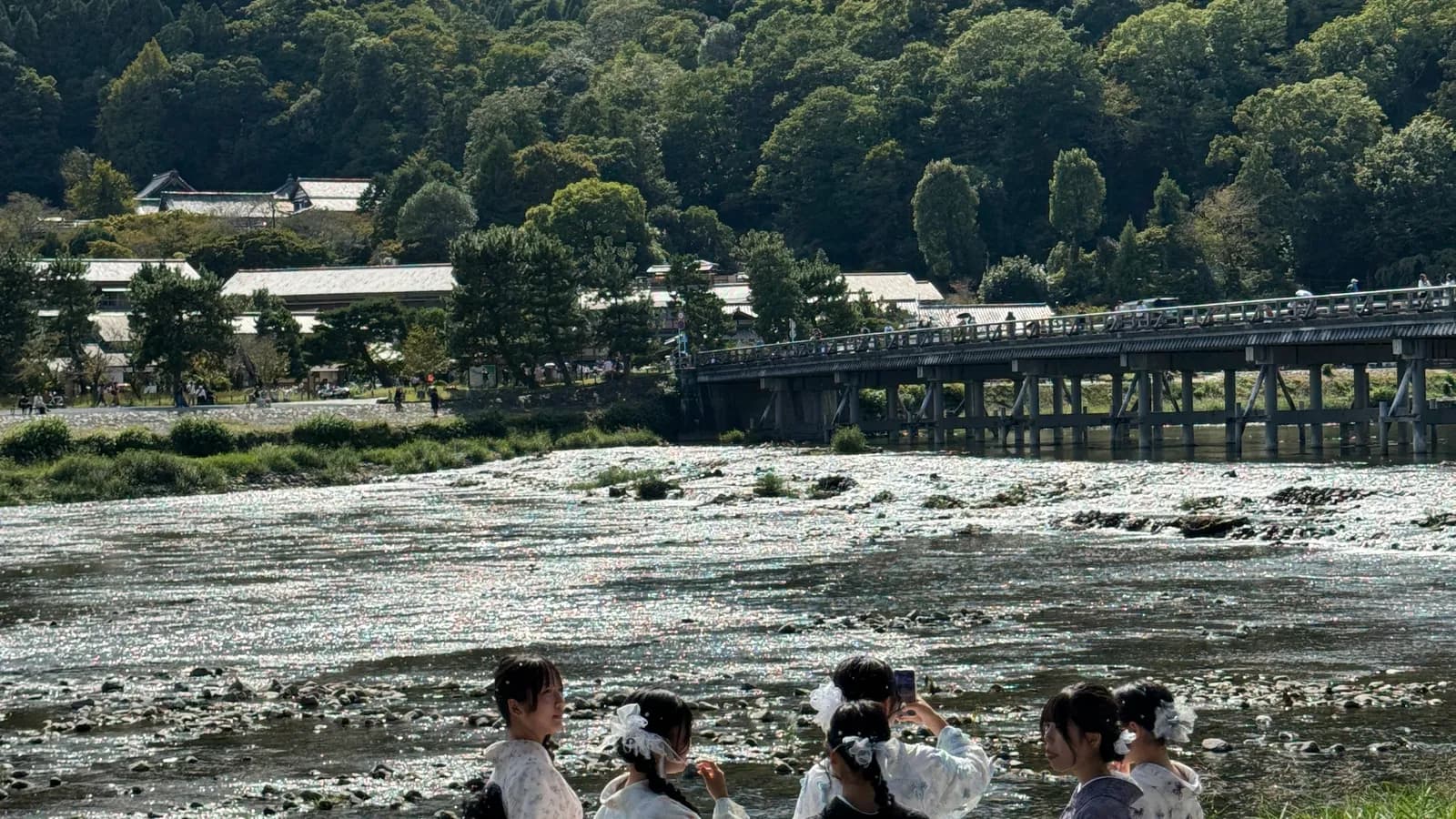
| 08:00 | Togetsukyo Bridge | Mountain, river, blossoms |
| 09:00 | Tenryuji | Garden-first rhythm |
| 10:30 | Coffee or late breakfast | Save energy |
| 12:00 | Kinkakuji or return to central Kyoto | Only if energy is still good |
| 15:00 | Pontocho / Kamo River area | Clean end to the day |
Key Stops, Practical Tips Included
1) Gion Shinbashi — Kyoto's blossom elegance only really exists in the morning
The area is still magical later, but the premium version of Gion exists at dawn: quiet water, wooden facades, and blossom reflections before the city turns into a photography queue.
- Practical tips
- aim for 6-8 a.m.
- move quickly and do not overcommit to one photo point
- Google Maps
2) Philosopher's Path — It is really about controlling flow, not just admiring blossoms
This route becomes memorable when the petals are fresh and the crowds are still manageable. During the right few days, the floating petals on the canal can be extraordinary.
- Practical tips
- best in the morning
- strongest just after peak bloom
- use a cafe break to keep the route human
3) Arashiyama — One line makes the premium difference: before 7 a.m.
Arashiyama is not primarily a place problem. It is a timing problem. The bamboo grove goes from dreamlike to overrun very quickly.
- Practical tips
- make it your earliest segment of the day
- do not leave it for afternoon
4) Honke Owariya — Your lunch needs to reset you, not impress you noisily
Cherry blossom Kyoto is loud and tiring. A calmer lunch matters more than many travelers realize.
- Useful Japanese
Osusume wa dore desu ka?— What do you recommend?Kore o hitotsu onegaishimasu.— One of this, please.
Plan B, Real Budget, and the Teaser
Plan B
- If it rains
- lean harder into temple and cafe time
- If bloom timing is imperfect
- focus on Kyoto's urban beauty, not just peak petals
- If your body starts dropping
- split east Kyoto and Arashiyama cleanly and stop forcing volume
Budget in One Sentence
In peak blossom season, Kyoto for 1 night and 2 days usually lands somewhere between 40,000 and 80,000 yen per person depending on lodging level.
Teaser for the Next Escape
If Kyoto is the city of crowded perfection, the next elegant move is somewhere looser, saltier, and easier on the body. Kamakura is a strong follow-up chapter.